The Maze Runner by James Dashner

maze runner


With the movie version of The Maze Runner coming out in September, which looks amazing based on all I’ve seen so far, I wanted to get started with actually reading the series.

In The Maze Runner, a teenaged boy named Thomas suddenly wakes up in a sort of elevator. He has amnesia – he doesn’t remember anything about who he is or how he got there, but he remembers basic things about how to live, the names of things, and feels like he recognizes stuff but doesn’t know why. At the end of the lift, the doors open to reveal a group of other teenaged boys stuck in a maze. Just as Thomas starts to figure out how the maze society works, another unexpected thing happens: a girl is delivered in the box the very next day, the first girl ever to be sent to the maze, and she has a scary message to deliver. Throughout the course of the book, Thomas tries to remember anything that would explain why they’re there and how they could possibly make it out of the maze.

I don’t even really know how to classify this book – it’s not dystopian as there’s nothing seemingly “perfect” about the society Thomas suddenly finds himself in, and Dashner doesn’t reveal much to us about life outside of the maze until the very end so I hesitate to call it a post-apocolytic novel, but it’s pretty clear that something big is happening. As the reader tries to figure it out along with Thomas and the other kids trapped in the maze, we’re a part of and adventure that is definitely thrilling.

Fans of books like the Divergent and Hunger Games series’ will find The Maze Runner interesting, though it doesn’t have the romantic element found in those. I’ll definitely be adding this title to my 8th grade summer reading list – it’s a great option for students probably 7th grade and up.

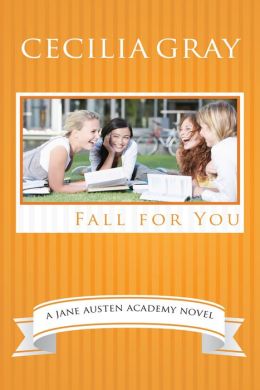
Fall For You by Cecilia Gray – It’s FREE!

fall for you cover

I’ve been a fan of Cecilia Gray’s Jane Austen Academy series for a while now, and the first book in the series is FREE right now on Amazon. Go download it quick!

YA Fiction: Who Is It For, Really?

I read a TON of teen fiction. I’m passionate about a well-told story that can teach a student more than I could ever hope to, like Divergent’s Tris in her sacrificial determination to save those around her, or The Giver’s Jonas in his refusal to sit back and let immorality rule, or The Outsiders’ Ponyboy in his effort to “Stay Gold.”

Fiction can be so powerful, and there’s nothing I love more as a teacher than seeing a student really connect with and learn from a character.

However, I’m noticing an alarming trend in YA fiction. More and more, I’ll get an advance copy of a book and wonder, as I start reading, WHO is this actually written for?

Shouldn’t that answer automatically be young adults? Teenagers? After all, that IS what YA stands for – Young. Adult. Now, though, it seems like there are tons of YA titles being published that are written FOR adults, though the characters happen to be teenagers.

What’s the difference? In books written for adults, there’s a feeling like the characters can do whatever they want because it’s all made up anyway, so the natural consequences of the world don’t matter. It’s like that creepy mom who tries to live vicariously through her popular daughter, sending her off to unchaperoned parties and indulging her every whim. It’s grown-ups trying to go back and live their teenage years the way they wish they could have spent them, without worrying about what will happen as a result. This is really disturbing.

While a fictional story is made up and can be a place to explore all kinds of dreams and hopes and wishes, however impossible they may be in real life, it’s also necessary to recognize choices that lead to heartbreak and rough adulthoods. As much as we might wish we could go back and have the party-filled, alcohol and vulgarity laced, sex and excitement ruled high school and college experience, there’s a reason we didn’t have that in the beginning: It’s. Not. Good. For. You.

And really, as authors, we have a responsibility to our readers. The best interests of teenagers should be at the forefront of our minds while we write. There should be some value to the reading experience – something to take away from it. That’s what I love about YA fiction; it’s a powerful avenue for teaching truths through the experiences of a fictional character.

On this site, I only highlight books that I feel are worthy of teens. The books I’d like to see my students reading. Otherwise, how can I call myself a teacher and a writer for young people?

From She Reads: The Divergent Trilogy

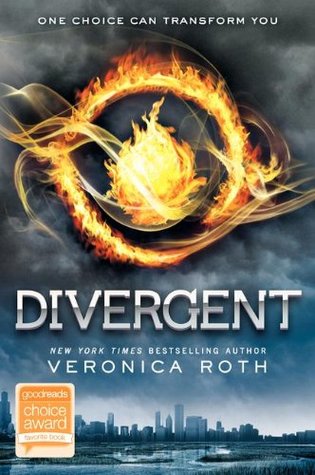
Divergent

This review originally posted on www.shereads.org last month.

—————————————————————–

Veronica Roth’s DIVERGENT series has taken the YA literary world by storm, comparable to the popularity of TWILIGHT and THE HUNGER GAMES in previous years. Some readers are eager to jump on the bandwagon and experience the latest all-the-rage series, while others are left with questions:

  • Does it really stand up to the hype?
  • Could it really be as good as The Hunger Games?
  • Is it worth reading the book if I already saw the movie?
  • Can I go see the movie with young adults without feeling awkward?
  • Is the movie more than just a reason to go watch Theo James on the big screen for a few hours?

The answer is a whole-hearted YES on all counts.

DIVERGENT is a dystopian trilogy taking place in a far-future Chicago. War has left the city in disrepair, and in an effort to keep peace people are divided between five factions: Abnegation (the selfless), Candor (the honest), Amity (the peaceful), Erudite (the intelligent), and Dauntless (the brave). When the story opens, the main character, Beatrice (Tris) Prior is preparing for the test that will help her choose which faction she’ll enter for her adulthood: Abnegation, which she was born into, or one of the other four. The drama begins, though, when Tris’s test results are inconclusive and she has to navigate society as one who doesn’t fit with just one faction; she is what they call Divergent, and that makes her a target of society leaders.

As a writer, Veronica Roth is incredibly talented. She has created a future world that is fascinating and believable, yet far-fetched enough that it feels not like home. There are references to known Chicago landmarks, making the setting recognizable and relatable. Her characters, while futuristic, are also completely relatable – it only takes a few pages to get drawn into Tris’s story, which starts in DIVERGENT, continues in INSURGENT, and resolves in ALLEGIANT. I’m also intrigued by the fact that she started writing this in college and, even now, with three books out, a major motion picture, and a fourth book coming soon, is only twenty-five years old. That’s crazy!

I saw the movie on opening night, and it was great. Really. But, it didn’t get anywhere near the level of detail that you find in the books. I know that’s a common complaint with movies based on books, but in this case it’s not just a casual observation about the movie; it’s a compliment to the depth of Roth’s writing. I love the way she has broken people down into factions to describe personality types and how that forces you think about human nature as you read. I love that there’s plenty of romantic appeal in Tris’s relationship with Four (played by Theo James, as seen in the movie poster) and that their relationship is supportive and exciting without being sexual. I love the suspense and intrigue that keep you reading without being able to stop – I blew through all three books in a week and just couldn’t get enough.

Basically, I just love this trilogy. This is one case where, whether you see the movie before or after reading the books, you really need to read the books. I won’t say they’re an easy, lighthearted read – the emotional rollercoaster is a wild one, and the characters and storyline will dominate your thoughts even while you’re not reading – but I will promise that they’re worth your time!

#ThrowbackThursday: For those of us who loved Boy Meets World…

…the very first look at Disney’s new Girl Meets World, featuring Cory and Topenga as parents. Heck yes!

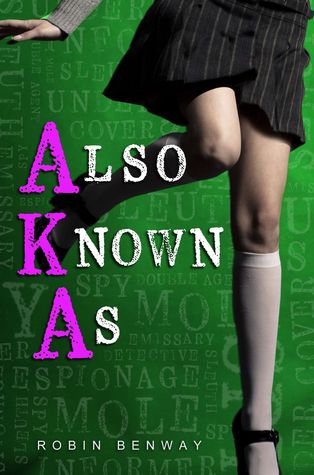
Also Known As and Going Rogue by Robin Benway

also known as going rogue

I really enjoyed Also Known As earlier in 2013, so when I saw the digital ARC for book 2 pop up on Netgalley I knew I needed to read it. Going Rogue did not disappoint! I will say, though, that if you haven’t read Also Known As, you should definitely read that one first. While Benway does take some time in Going Rogue to recap what happened previously, it’s not really enough to give you the whole feel for the first book.

Maggie is not your typical teenage girl, no matter how much she wants to be, because you just can’t have secret super spy parents and be one of the world’s best safecrackers and consider yourself normal. I appreciate her desire to have a normal life, though, and she gets it to some extent with her best friend, Roux, and her boyfriend, Jesse. It’s just that she also spends hours crammed into tiny crawlspaces in international criminals’ houses. Tiny detail.

What I like about this series is that it’s realistic in its characters, but the circumstances are fantastical. I mean, no… it’s probably not real life-like that these things happen to Maggie and her family and her friends, but their reactions to the situations feel real. That’s what I like in a book – normal people in abnormal circumstances. I like to see how real people react to stuff, and I think there’s a lot here in terms of Maggie’s family and their dedication to doing what’s right. And, side note, I’m also in love with the part of this that takes place in Paris because I want to go live there for a few years!

While the characters are high school aged, this is one I wouldn’t mind seeing in the hands of a middle schooler – fairly clean in the sex and language area. That’s refreshing.

Find both titles at your local bookstore, favorite online retailer, or here at Amazon’s Robin Benway author page.

Surviving Social Media and Cell Phones.

A recent Rolling Stone article titled “Sexting, Shame, and Suicide” is bringing national attention to an issue those of us working with teenagers have seen all to often – how easy social media and texting makes it to spread everything. Pictures, rumors, videos, and more can be sent out to seemingly everyone in a matter of seconds, and the impact can be startling. I highly encourage everyone, teenagers and adults, to read this article.

Now, after reading the article, how can you keep yourself safe? If you’re a parent, how can you protect your own kids?

Know that it won’t necessarily be easy, but parents and teens can and should talk about the hard stuff. Parents, your kids aren’t going to come talk to you if they’re convinced all you’ll do is yell and judge. And maybe you don’t think that’s how you come across, but you have to remember what it’s like to be a teenager. Teens, your parents have been through crap before, and they can help you through it now.
Mistakes are inevitable. Parental love is unconditional. Communication is essential.

Teenagers need to know that it’s not ok, no matter what mistakes they make (drinking, drugs, etc.) to be taken advantage of sexually. There are no exceptions to this rule. None. And an inappropriate picture or video spread around via texting or social media is included in that. They need to be spoken to about the potential consequences that come from snapping semi or fully nude pictures of themselves and sending them to anyone. On the flip side of that, teens also need to be counseled in how to handle inappropriate material that’s sent TO them. Delete it. Tell the person. Talk to parents. These are things that have to be talked about.

Know that the preteen teenage years are NOT the time to back off. Parents should be involved in every social media world their kids belong to. All logins, passwords, websites, etc. should be kept up to date and shared with parents. Not so that parents can spy, but so they can monitor and protect. Cell phones should be treated the same. This may not make you the most popular parent on the block, but parenting is NOT a popularity contest.

Know how to use privacy settings and insist that they not be altered. Every social media avenue offers some way of setting a user’s information to private rather than public, and every safeguard should be used to ensure teens are not broadcasting personal information to the world. In addition, most cell phones geotag pictures with “where and when” info, which can be accessed through social media sharing (for example, if you choose to use location services on Instagram and tag your #selfiesunday at “Home,” then anyone who follows you can see on the map exactly where “Home” is… that’s dangerous).

And finally, help teens really remember that on the other side of that electronic communication is a real person. I’m noticing more and more that teenagers often disconnect themselves completely from real human emotion when they’re sitting in front of a cell screen or computer monitor. It’s really easy to send out a tweet or message somebody a picture real quick without thinking through the face-to-face ramifications of that action. Help them understand that anything sent electronically is equivalent to yelling that thing out in the middle of a crowded hallway at school.

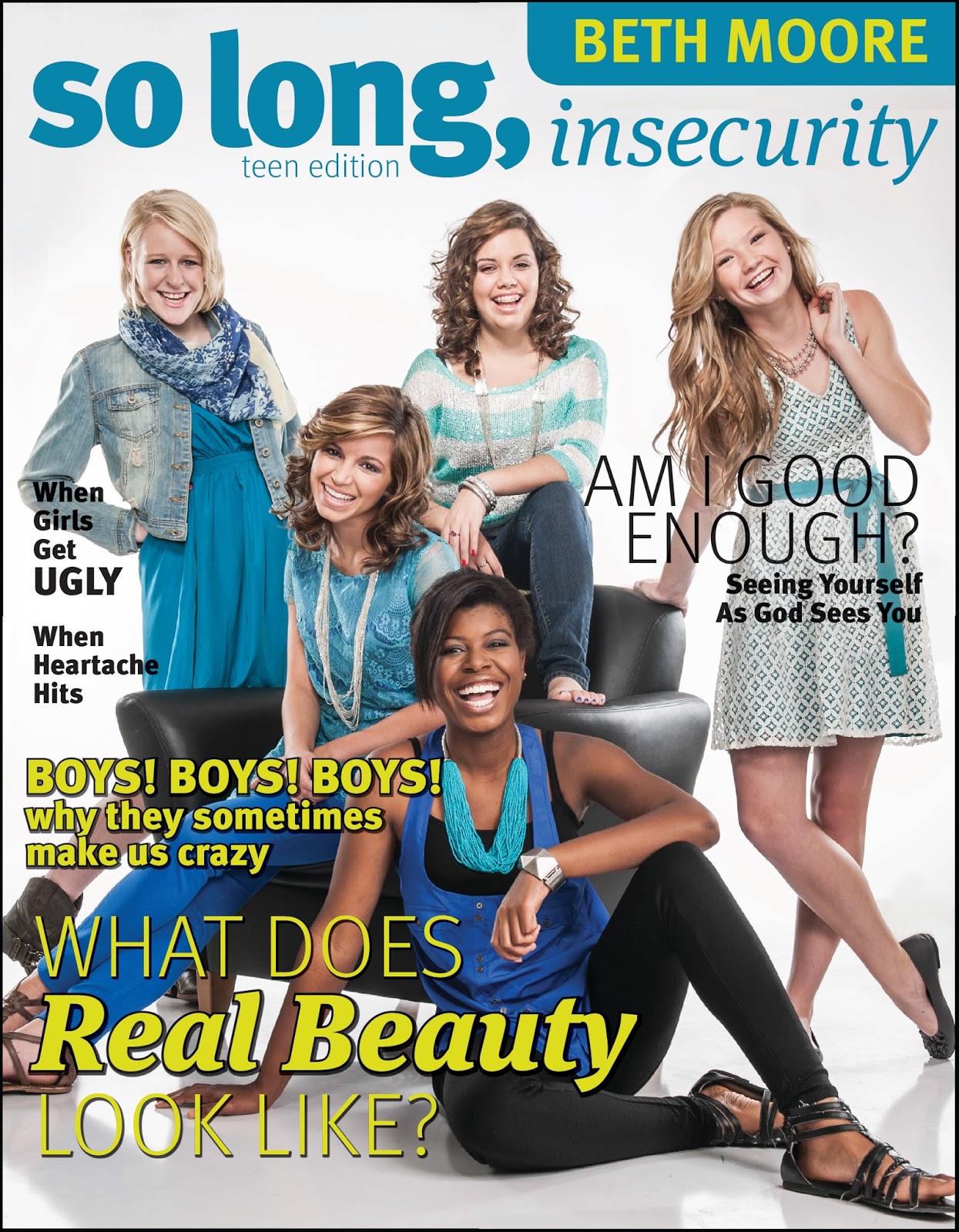
So Long, Insecurity – Teen Edition.

I LOVE THIS.

As a teacher, one thing that breaks my heart is seeing every single teenage girl I’ve ever worked with struggle deeply with insecurity. For some, it’s their physical attributes that make them insecure. For others, it’s a lack of popularity, or crap going on at home, or too little money to buy all the trendiest stuff, or peers that are mean for no reason, or any number of other things.

For me, it was physical. It was my weight. As a preteen, teen, college student, and beyond… there was always a thought that if I could just lose a certain number of pounds, people would like me better. Boys would ask me out, girls would invite me to hang out with them, and the entire world would fall at my feet.

Of course, it was never really all that bad – I just couldn’t see through to the other side when everything would be ok. I couldn’t see my adult self, still overweight but happy and well-loved, while I was in the midst of feeling like a repulsive, far from lovable teenager. My focus was on what was wrong with me and how I didn’t fit in, not on what was good about me and what I had to offer the world.

Something like this book would have helped me A LOT. It’s real. It’s honest. It covers a whole multitude of issues – how to dress to cover problem areas, how to deal with boys, how to manage feelings of depression and jealousy – and it’s all handled in a positive, uplifting, Bible-based way. And while the fact that it’s Bible based may seem to some like a reason to slap a “for Christian girls only” sticker on this, I wholeheartedly disagree.

In fact, I have a student in mind that struggles deeply with feeling like she doesn’t fit in. She feels like nobody likes her, she’s not cool or popular, boys will never like her, and she’s just miserable. Of course, there are a number of students (current and former) who could identify with that description and might possibly wonder if I’m talking about them. This particular girl is not a Christian, but I think she would absolutely eat up the advice and encouragement found in this book. And, at the same time, I immediately e-mailed a friend after finishing my preview copy and told her about it for her church small group of high school girls. I think this is versatile and completely relevant for all girls, from those who don’t already identify themselves as Christian to those who are secure in their faith and involved in church.

The format of this teen edition is perfect, too. It’s full of pictures of real (not perfect) teenagers wearing fashionable (not all designer) clothes and honest testimonies from girls who’ve been there. There are quizzes for each topic, pages full of encouraging verses, and so much more. It’s not an overwhelming, boring nonfiction kind of book that would make girls reject it – it’s more like a pretty, glossy magazine full of greatness.

The description I saw somewhere for this book said it’s for girls ages 12-16. I disagree. I’d like to see this in the hands of 4th and 5th grade girls who look up to older girls and can’t wait to be teenagers. I’d also like to see this in the hands of high school juniors and seniors, and packed into the bags of college students heading out on their own for the first time. There’s a great basis here for being comfortable with who you are, who you were created to be, and how to maintain your focus on your purpose and your Creator. I think that’s so important for girls ranging from upper elementary to college.

So buy a copy for yourself if you’re a young woman. If you’re a parent, buy one for your daughters and nieces and every young woman you know. Please, as a teacher in the trenches who sees this stuff in action, invest in this and use it as a springboard for discussion in your house. Encourage the young women you love and fill them with confidence!

Click HERE to buy on Amazon.
Click HERE to buy on Barnes and Noble.
Or check with your favorite book store. :)

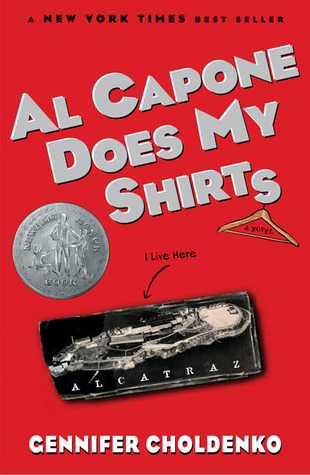
Al Capone Does My Shirts

I consider it great fortune that I just happened to discover an ARC (Advance Reader’s Copy – before final edits and polishing for publishing are finished) of this in one of my favorite used books stores in Boone, NC before the book was even published. I read it, loved it, and vowed to make my 7th graders read it as soon as it was published in 2004. Since then, it has been one of my favorites both in and out of the classroom.
Al Capone Does My Shirts is about a boy, Moose, who is forced to move to Alcatraz Island when his dad takes a job working at the prison. Of course, it’s more than a little intimidating being on an island with the most notorious convicts in America, and Moose and the other island kids take full advantage of this when they’re off the island, which lands them in all kinds of trouble and awkward situations. 
In this story, Moose is a really interesting character full of wit, intelligence, sarcasm, and integrity. His childhood has mostly consisted of taking care of his “little” sister Natalie, who is actually older than he is but acts younger because of her autism (in the 1930’s, they didn’t have a name for autism, so all they knew was that Natalie was just different). While he sometimes can’t stand the responsibility, it is clear that he’s the one who understands her the best, and so he’ll do anything to help her. What he eventually does do to help her is nothing short of risky business.
A few years ago, Choldenko published a sequel to this called Al Capone Shines My Shoes. I didn’t love it as much as the original, but it was a good follow up for those who want to know more about what happens to Moose and the other characters. 
If you haven’t read this, you should! Enjoy it. :)
~Melissa