Wishing Jaye Robin Brown all the best on the publication day of her debut, No Place to Fall! Click the picture to find it on Amazon. You’ll love this!
Wishing Jaye Robin Brown all the best on the publication day of her debut, No Place to Fall! Click the picture to find it on Amazon. You’ll love this!

I’m a fan of Get Happy, in which we follow sixteen-year old Minerva’s quest to buy herself the only gift she really wanted from her birthday (a ukelele) but which her mom is totally ignorant of, to navigate a complicated possible relationship with the father she thought was a deadbeat and his annoyingly perfect stepdaughter, to survive a job in which she has to dress up as a mermaid and perform at little kids’ birthday parties, and to explore a sweetly budding romance. I liked Minerva’s development as a character and think her story is worth reading.
You can find Get Happy here on Amazon

I’m excited to get to help close out the Debut Authors Bash, put on by YA Reads, with an interview from Linda Vigen Phillips. I was fortunate enough to meet her and get a copy of the Crazy ARC after being “Facebook introduced” through a mutual friend, which I am so grateful for. She’s sweet and humble and her writing is absolutely beautiful. I wish you all the publishing success in the world, Linda!

First, because Crazy hasn’t quite been release to the world, here’s the Goodreads summary:
Laura is a typical fifteen-year-old growing up in the 1960’s, navigating her way through classes, friendships, and even a new romance. But she’s carrying around a secret: her mother is suffering from a mental illness.
No one in Laura’s family will talk about her mother’s past hospitalizations or increasingly erratic behavior, and Laura is confused and frightened. She finds some solace in art, but when her mother, also an artist, suffers a breakdown, Laura fears that she will follow in her mother’s footsteps. Left without a refuge, can she find the courage to face what scares her most?
Sounds interesting, right? And it is… it’s just wonderful. I sent Linda a few questions, some about the story itself but also some that focused on the art found in the story. It was intriguing and added a lot to Laura’s character. Check out my questions and Linda’s responses below, then make sure you enter to win a copy of Crazy!
Crazy is semi-autobiographical, and while the names and certain events are fictional, much of the story is based on my experience growing up with a mother who had undiagnosed bipolar disorder.
2. Crazy is written in verse rather than prose, which I think gives it a quiet sort of elegance. What was your reason for wanting to tell Laura’s story through poetry?
I started writing poetry when I was an adolescent, and it has always been a source of comfort and my favorite way of thinking things through. My father’s love for poetry, as it is mentioned in the book, was genuine and contagious, and that’s how I became hooked on it. Originally I wrote a collection of twenty poems that served as a cathartic means of dealing with the raw emotions and unanswered questions surrounding my mother’s illness. A number of them were published in adult literary journals, and I began thinking in terms of a book of poetry when my best writing buddy suggested they should become a novel. I had the good fortune of working with Patti Gauch, retired senior editor at Philomel, during a 2009 Highlights Foundation workshop at Chautauqua, and she was instrumental in helping me nail the YA voice in verse form for this book.
3. Why did you choose to set the story in the 1960’s, and what do you hope today’s teenagers will take from it?
By now you’ve probably figured out the answer to this question. The 1960’s is actually when it all happened, and I wrote it like it was. An interesting side-note to this time period came during the editorial process, during which I had to throw out over twenty phrases that were certainly appropriate for “the sixties” but apparently not specifically for 1963. It seems that all the “grooviest” catch phrases and slang happened just after 1963, which is the year in which the story is set. That was the year Kennedy was assassinated, and there is a section that features this in the book. I do hope that young readers will get a sense of how that event affected all of us who lived through it, not just families like mine who were dealing with their own crisis. And, as I mentioned in the afterword, I hope that young people who might be affected by mental illness will realize that methods of treatment and available resources have made considerable gains since the sixties.
4. My favorite element to Crazy, hands down, was the art. I so desperately wanted to see the paintings and the sculptures that my brain worked overtime trying to imagine it all, which forced me to pay attention to the details and try to visualize the artwork. What was your inspiration for the artistic elements to Crazy? Does the sculpture family actually exist? Are there pictures, of any of the actual artwork or that served as inspiration, you could share with us?
It wasn’t until after several revisions that I realized the artwork was a metaphor for my own writing. Art was the glue that held Laura together, just as my journaling and poetry helped me to stay intact in my youth.
My mother really was a gifted painter, although we only have two of her pieces. But they are good, and I’ve spent countless hours staring at, appreciating, wondering about, delving into, imagining, and seeing the passion that she had. I guess it is that appreciation of passion that drove me through the artistic part of this book. I, too, in my limited way, appreciate good art, and I have some personal favorites that I mentioned throughout the book. Of course I have a fascination with Van Gogh, not only for his art, but his tormented journey through mental illness. And Hopper is a personal favorite because of his amazing use of light, Monet for his wonderful colors.
I am a visual thinker, and it was relatively easy for me to envision the paintings of the pelicans as well as the sculptures. There was no existing artwork serving as models for any of those pieces other than the pictures I created in my own imagination. It was important that Laura get in touch (literally) with the art that was her new medium, and I thought her creation of the clay figurines was a fitting extension of the ceramics that her mother painted, but did not actually create. It was Laura’s new identity, and her way of working through the family issues and finding peace within the existing structure.
5. Is there anything else you’d like to share about Crazy?
I poured my heart into this book. I hope it might pour back to the reader a healing of memories, a comfort for the present, or a hope for a better future. Persons suffering from bipolar disorder can have normal and productive lives if they seek and follow good medical practices. I hope this book helps get that point across.

Written by author Amy Zhang while she was still in high school, Falling Into Place explores the life of Liz Emerson, a high school it-girl willing to do just about anything to stay at the top of the social ladder. Liz develops a conscience as she notices the way her actions affect the lives of her peers and, feeling like nobody really knows her or cares about who she really is, she decides it would be better for all involved if she just killed herself. So she plans it out and goes through with her plan.
Now, a book like this has the potential to be horribly depressing, but this one isn’t. Zhang’s writing is raw and gritty (language, casual sexual references, drug use, and more) but it’s also intriguing and ultimately hopeful. The way the story is constructed, told in chunks hopping around from months before her suicide to childhood memories to the moments before the crash, allows the reader a chance to really understand Liz and her closest friends and family members. Through these snipers of story we come to know Liz’s whole story, and we can see that she’s not nearly as alone as she believes that she is.
Falling Into Place is gut-wrenching and honest and relevant in a way that must come from the author’s age – in high school herself when it was written – which makes it impossible to ignore. SE Hinton wrote about the Greasers and the Socials, rumbles and drive-ins, when she was just a teenager herself, and Falling Into Place will do much the same for today’s world. The issues of drugs, promiscuity, bullying, social media, depression, and suicide are all very real in the lives of today’s high schoolers, and it’s in books like this that those issues find a solid voice.
The stories of Liz, Julia, Kennie, and Liam will not be soon forgotten. This is a remarkable debut from a talented writer; Zhang is definitely one to watch for the future.
I highly recommend checking out Falling Into Place, which is out now. You can find it here on Amazon
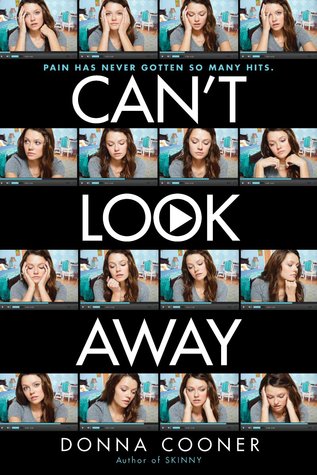
First, the Goodreads summary:
Torrey Grey is famous. At least, on the internet. Thousands of people watch her popular videos on fashion and beauty. But when Torrey’s sister is killed in an accident — maybe because of Torrey and her videos — Torrey’s perfect world implodes.
Now, strangers online are bashing Torrey. And at her new school, she doesn’t know who to trust. Is queen bee Blair only being sweet because of Torrey’s internet infamy? What about Raylene, who is decidedly unpopular, but seems accepts Torrey for who she is? And then there’s Luis, with his brooding dark eyes, whose family runs the local funeral home. Torrey finds herself drawn to Luis, and his fascinating stories about El dio de los Muertos, the Day of the Dead.
As the Day of the Dead draws near, Torrey will have to really look at her own feelings about death, and life, and everything in between. Can she learn to mourn her sister out of the public eye?
I really, really liked Can’t Look Away, and I think Donna Cooner hit the nail on the head with her portrayal of Torrey. Yes, it takes a little while to warm up to Torrey – you wonder how it is that she can’t stop focusing on her followers and her popularity and how others perceive her, which all makes you want to reach inside the book and shake some sense into her. From my work with teenagers, though, Torrey as a character is a pretty astute commentary on teenage girls (and guy, frankly) and their need for social media attention which also leads to real-life attention. While Torrey’s case might be a little exaggerated due to her vlog fandom and due to the fact that she’s not real, it’s eerily close to reality.
Aside from Torrey, there are some great supporting characters including a sweet potential romance and an intriguing story that make you want to see how it all turns out. Can’t Look Away was a great, timely, very real story that teenage girls will easily identify with. Find Can’t Look Away here

Jane Casey’s How to Fall is a great story all around – I loved the characters, the setting, and the eerie mystery surrounding Freya’s death. Jess makes an intriguing protagonist and amateur detective which made the story even more likable. While this novel felt complete and satisfying, it also left room for sequels, which I’m very much looking forward to! If you’re looking for something to usher in the fall season and compliment the Halloween candy already showing up in stores, this is definitely it! Find How to Fall: A Novel (Jess Tennant Mysteries)
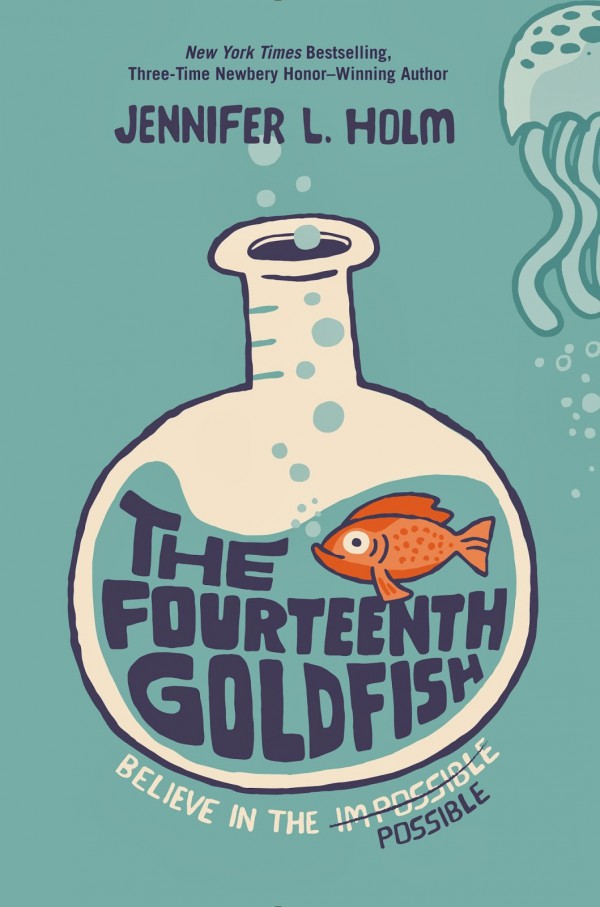
The Fourteenth Goldfish
Blurb from Goodreads:
Galileo. Newton. Salk. Oppenheimer.
Science can change the world . . . but can it go too far?
Eleven-year-old Ellie has never liked change. She misses fifth grade. She misses her old best friend. She even misses her dearly departed goldfish. Then one day a strange boy shows up. He’s bossy. He’s cranky. And weirdly enough . . . he looks a lot like Ellie’s grandfather, a scientist who’s always been slightly obsessed with immortality. Could this pimply boy really be Grandpa Melvin? Has he finally found the secret to eternal youth?
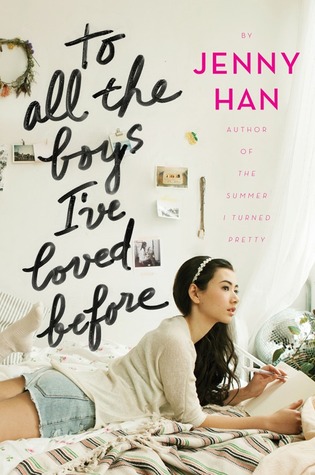
In this, the latest title from the incredible Jenny Han, protagonist Lara Jean has dealt with the end of each crush she’s had on a boy by writing a letter to him detailing the reasons she loved him and the reasons she’s done loving him… like a break up letter, but without every having an actual relationship. The problem, of course, is that when you write things down they can be discovered by others, and her letters actually get mailed to these boys she had crushes on in the past. Some of them she currently goes to school with and knows, some of them have moved on and live elsewhere, but regardless it’s awkward for all of them. Where I can picture myself completely freaking out and panicking, Lara Jean holds it together remarkably well and by the time you get to the end you’re so deeply invested in her and so completely rooting for her that you don’t want it to be over.
Jenny Han has a kind of quiet, understated way of developing really amazing characters that stick with you well after the book is over. To All the Boys I’ve Loved Before is reminiscent of her style with the Summer I Turned Pretty trilogy, which is great news for me – I absolutely adore those books. There are going to be more books to follow, but this one resolved well enough to satisfy while leaving just enough curiosity to make me look forward to the next one!
Find To All the Boys I’ve Loved Before
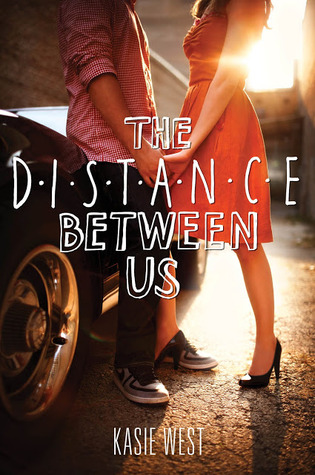
I’ve been wanting to read this for forever because of its adorable cover and because I’ve heard so many good things about Kasie West, but for some reason I just got around to it recently. It was so much more than I could have hoped for! Kasie West has sealed herself solidly onto my must-read list, which means I have more books to read!
In The Distance Between Us, Caymen is a girl taught to be weary of the wealthy – she helps her mom run the doll shop that they own and live above, and money is always tight. When Xander comes in to pick up a doll for his grandma, it doesn’t take Caymen long to recognize him as one of the wealthy elite and write him off. Xander doesn’t give up. He’s instantly taken with Caymen and just starts showing up all the time. Just as Caymen starts to recognize her own feelings for Xander, things get super complicated.
This story is a sweet realistic fairytale of a romance mixed with some intriguing family drama that ultimately ends beautifully. I can’t wait to read everything else Kasie has already published, and I’m looking forward to her future works as well.

Mostly I want to say that Some Boys handles the topic of rape with intelligence and great storytelling, which is so often the most effective way to teach on such a sensitive subject. In the vein of Laurie Halse Anderson’s Speak, Some Boys tackles the difficult issues of rape, bullying, slut shaming, etc. which are all incredibly important topics for teens (and parents, teachers, and more) to be aware of and discuss openly.
I was troubled, though, by how teachers and school administration were portrayed in this. I am a teacher. I have worked in several schools and with plenty of different types of teachers so far in my career. I can’t speak for all schools, obviously, and it saddens me to know that there probably are some teachers and administrators who would choose to look the other way rather than get involved, but I can say with certainty that it’s not the norm. Teachers teach because they care. Administrators too. In that way, I felt like that aspect of this book was unfairly represented. There would have been more than just the Coach who tried to help, and it would have been before he finally actually stepped in. Also, schools do have the ability to intervene and discipline students based on social media harassment when it impacts what’s happening at school, as this obviously does. Grace may not have felt like there were caring adults around her, but I want to urge all of my teenage readers to seek out help at school – we’re there because we want to help, not to shame you.
All of that aside, I do think there’s a valuable message here, and I’d encourage high school girls, especially, and parents of teenagers to read it. And, I think the most valuable lesson here is to urge students and parents to communicate with authorities, whether police or school based, when they know minors are being harassed. Most of the adults in this earn a giant F from me in how they handled Grace’s situation.
Grace’s story is immediately compelling and engrossing, and ultimately is a sweet story of healing and love. Find it here on Amazon.


 Pimples, Popularity, and Protagonists
